SUBMIT BIODIVERSITY LETTER TO BC GOVERNMENT JANUARY 31, 2024
Help us raise money for our bumper stickers and future presentation tour on Go Fund Me
Video on Aspen and Bobtail Forest Fire of 2015
For media!
For you!
Download this letter (MicrosoftWord) in and send it to the Chief Forester and/or Minister Doug Donaldson
Download this letter (PDF) in and send it to the Chief Forester and/or Minister Doug Donaldson
Print off this awesome poster and hang it in your local coffee shop! (PDF version)
Share this awesome poster online (JPEG version)
SIGN OUR PETITION on CHANGE.ORG
Follow and like our Facebook Page
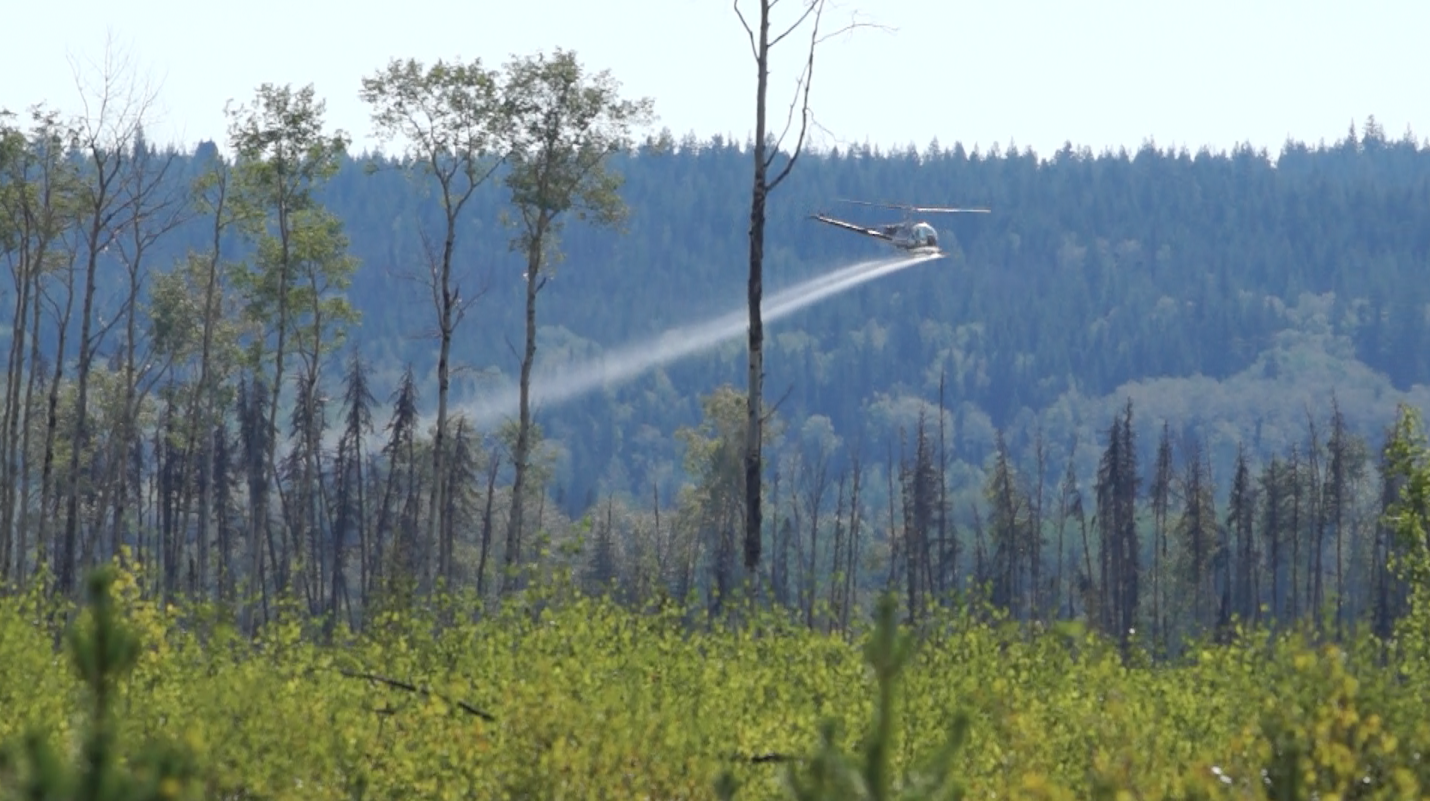
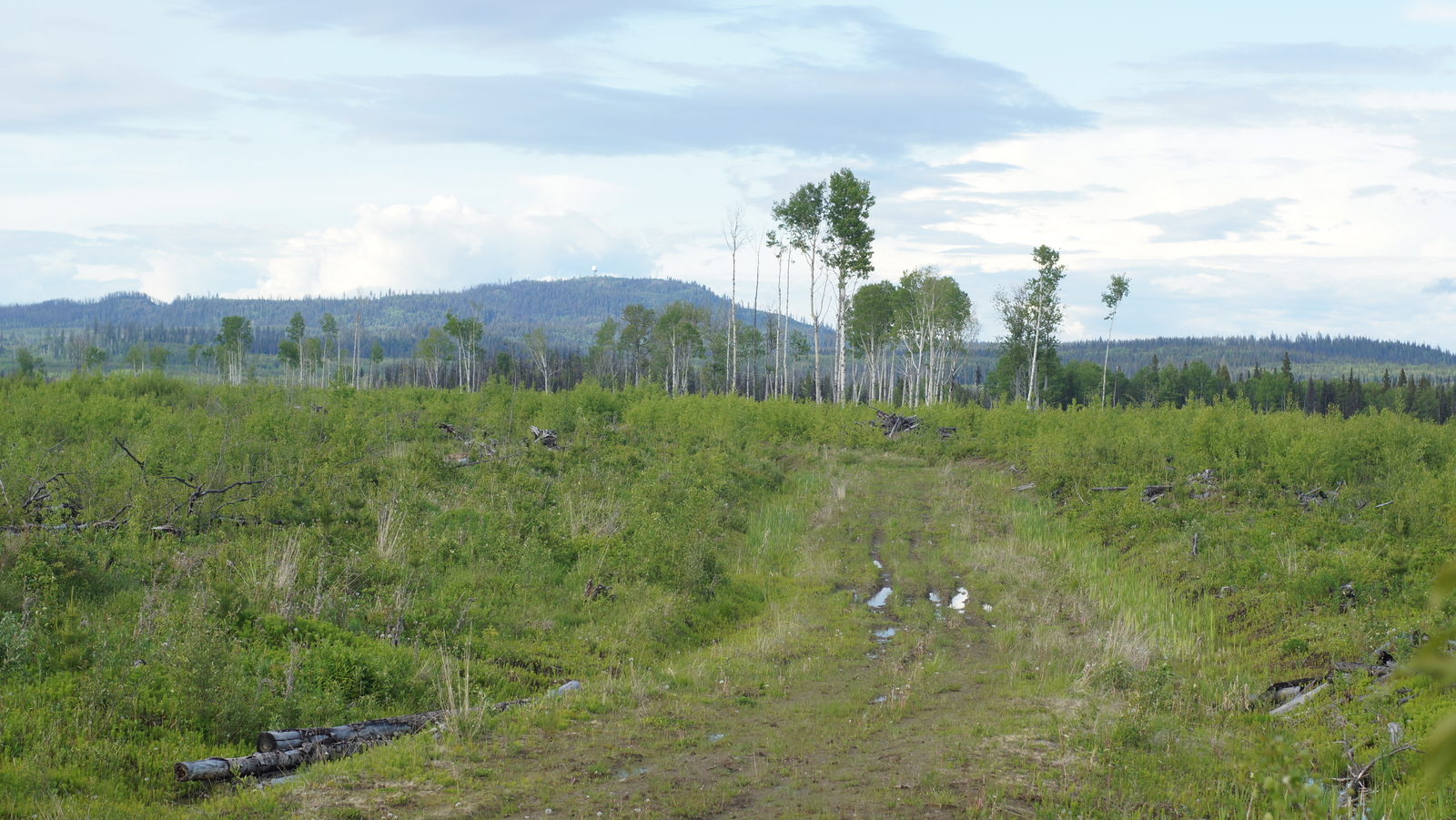
A rich naturally regenerating forest near Baldy Hughes, British Columbia, before being aerially sprayed. Photo taken June 13, 2013.
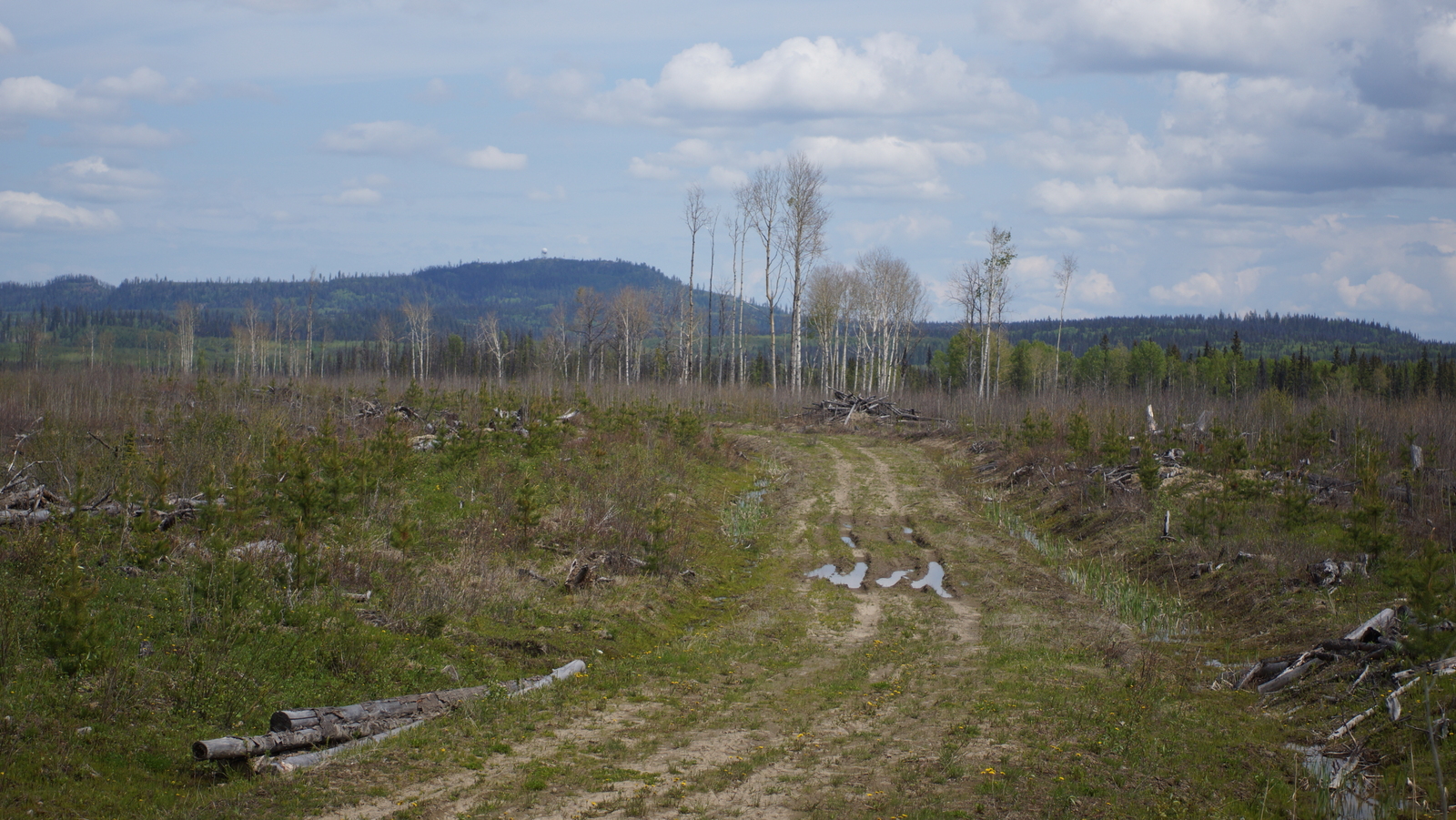
A silent spring in a once bustling forest after being sprayed. Photo taken May 31, 2014, only time I was able to take this picture. Note full leaf out of trees in background and on hillside.
Every year in BC forest companies and government agencies spend millions of dollars to eliminate broadleaf species including aspen and birch from replanted conifer plantations, as shown in the photos above.
The majority of the area where broadleaf is eliminated is done with the use of aerial application of glyphosate formulations, the most common being VisionMax, which is composed of glyphosate and a variety of proprietary, unregulated additives that make glyphosate more toxic but which remain unregulated.
This vast conversion of our forests from bio-diverse stands with many broadleaf species to conifer monocultures is required by law, signed off on by Registered Professional Foresters, and is supported by the Association of British Columbia Professional Foresters.
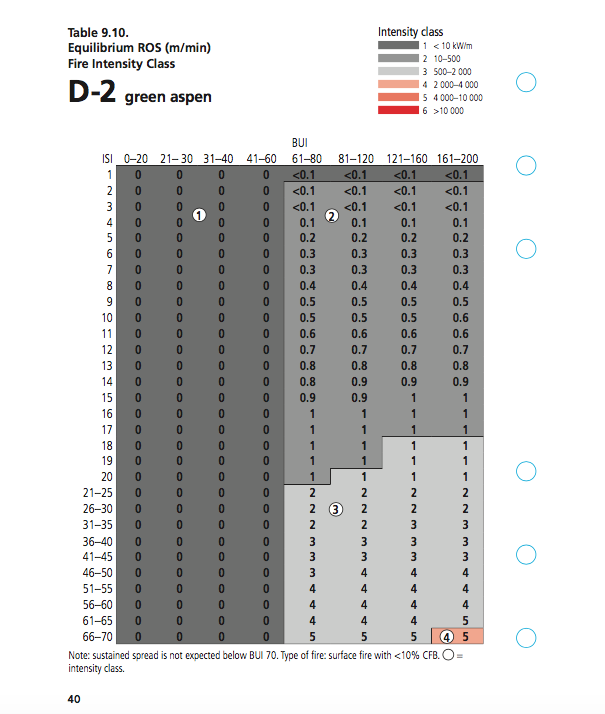
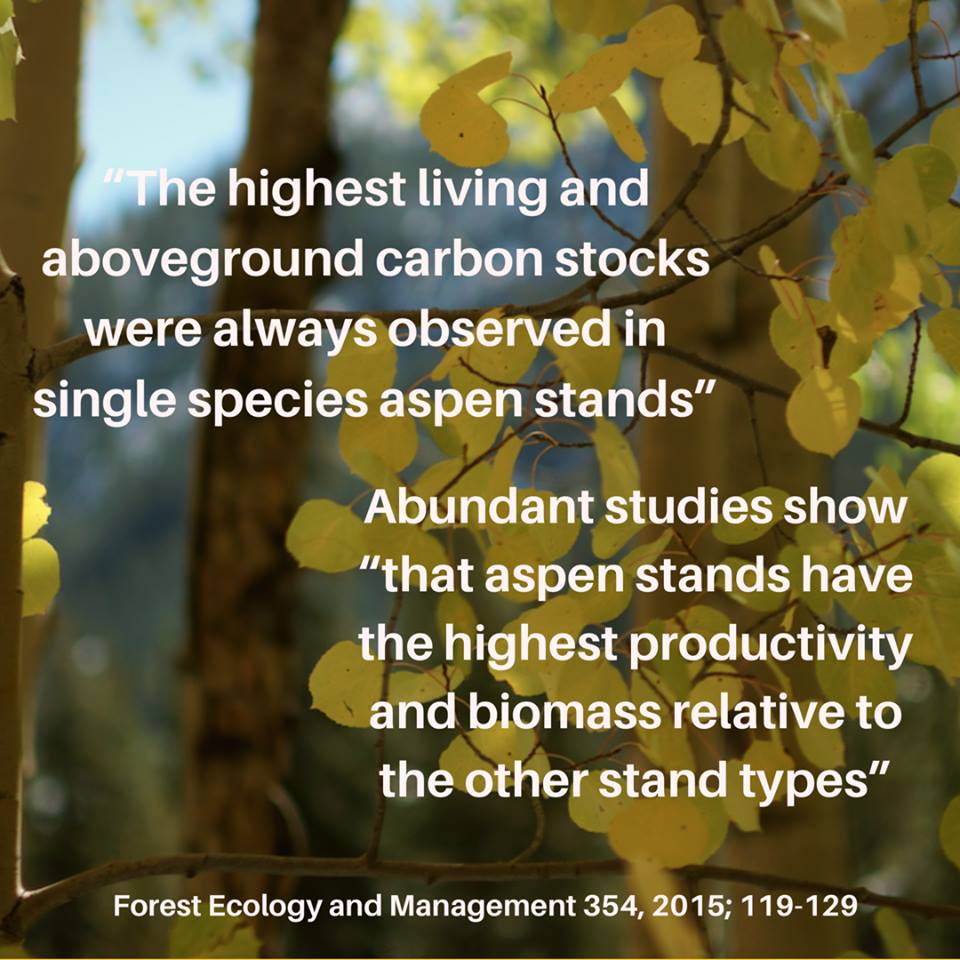
The result is a plantation forest with far less biodiversity than before. Without broadleaf trees and shrubs, many species of northern forests could not survive. Without aspen you lose an incredible array of associated shrubs and vegetation. They are also more vulnerable to wildfire. A 36 year study by Steve Cumming et al showed that pine forests have a burn rate 840% higher than aspen forests. In leaf-out, aspen forests are seen to be a non-burning fuel-type by the Canadian Wildfire Prediction Behaviour Manual. Due to their darker colour, conifer forests absorb up to 80% more summer-time sunlight than aspen forests, increasing localized and landscape-wide temperatures. Furthermore, aspen forests transpire 50% more moisture than conifer in one US study which creates a cooling effect noted in this Canadian study. They also utilize water more efficiently, contribute to higher stream flows, and create better quality water. Because of these factors, conifer expansion at the expense of deciduous is seen to worsen global warming. Finally, deciduous are superior at sequestering carbon. In an Alaska study, aspen and birch sequestered 400% more carbon than spruce over the life-cycle of the forest. Aspen trees are far better at sequestering CO2 with one study showing aspen sequester 25% more carbon than pine and 68% more carbon than spruce, while a BC government study estimates aspen sequester 45% more CO2 than a pine tree and 25% more than a spruce tree. None of this is new. Scientists have long known that deciduous tree species are better suited for dealing with runaway climate change.
The reason this is done is because forest industry in the Central Interior does not utilize aspen. Consequently aspen is considered a “pest” and government requires it’s elimination. Due to existing stocking standards, mixed forests are technically illegal, despite recent studies showing they create more timber and are more resilient. Unless the lumber company wants to face a penalty for failing to “reforest”, they have to eliminate “weed” trees including aspen to a very limited threshold. Unless aspen is considered a commercial species, which is not the case anywhere in the Central Interior, 46.11 of the FRPA Regulations requires a cutblock be 95% conifer, and the deciduous patch can be no larger than 2 hectares. Converting mixed stands to primarily monocultures is considered sustainable forestry and is certified by organizations such as SFI
A long-standing practice, we’ve sprayed or manually brushed over 1.3 million hectares of forest across the Province since 1980, an area a third the size of Vancouver Island. We still spray around 15,000 hectares a year today, mostly in the Central Interior.
This is a website that seeks to provide information on this activity and to pose a few rhetorical questions:
- Why is it illegal to grow mixed forests with deciduous and coniferous components in BC?
- Will lodgepole pine monocultures survive as our climate warms?
- What if aspen and birch make our forests more resilient?
- Are we sure aspen and birch won’t have increasing commercial values into the future?
- Why won’t industry utilize aspen west of the Rockies?
- How do we know that aspen and birch and the many other shrubs we kill don’t play a critical role in maintaining healthy soils?
- How do we know that the fire-proof aspen and birch won’t play a role in suppressing wildfires as warmer conditions prevail?
- Why are we applying a chemical to public forests that is a known toxin to frogs, insects and invertebrates, and which kills food for many animals and has a known impact on wildlife populations?
- Why does the professional association of foresters in BC condone this practice?
Unwanted Forest Silent from James Steidle on Vimeo.